Opiate Addiction
Long-term use of opioids causes tolerance to develop so that in order to achieve the same degree of euphoria, larger and larger doses must be taken. When people have been off the drug for some time their tolerance decreases and a common cause of death results from a user taking the same amount of drug used before they stopped or cut down.
When high doses have been taken for several weeks, a sudden withdrawal causes symptoms of discomfort similar to flu. These include aches, sweating and chills, tremor, sneezing and yawning and muscular spasms, all or some of which usually commence between 8 and 24 hours after the last dose of heroin. Although these effects usually fade within 7 to 10 days, feelings of weakness and loss of well being can last for several months.
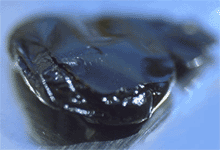
Physical dependence is easier to overcome than psychological dependence, which some long-term users develop, although dependence of any kind is not a certainty. Some people can use heroin on an occasional basis and not become addicted.
Prolonged usage can cause physical damage to the body, although not necessarily from the drug itself. Repeated injections with dirty needles can result in diseases such as Hepatitis, AIDS and Tetanus, especially when sharing needles. There is also a risk of using impure drugs which have been mixed with unknown substances. Repeated sniffing of heroin damages the nose.
Apathy and reduced appetite caused by drug use can lead to disease as a result of a poor diet, self neglect and bad housing conditions. The increasing cost of satisfying tolerance / dependence can lead to money problems which can result in self neglect and major social problems.